REVIEW · VATICAN CITY
Private Tours: A Journey through the Ancient Rome
Book on Viator →Operated by Cab Rome · Bookable on Viator
Rome looks different at car speed—and better timed.
I like that this is a private half-day in an air-conditioned minivan or coach, so you’re not stuck in a bus line or sharing every pothole and prayer. I also like the focus: you hit major classics like St. Peter’s Square and the Pantheon corridor without wasting the whole day getting between places. One thing to consider: there’s no tour guide included, and tickets/entrance fees aren’t part of the price, so you’ll rely more on your driver (and your own planning) than on a narrated tour.
What makes this work well for real schedules is that you still get a bit of breathing room at stops. You’ll have time to look around on your own at key photo spots like the Trevi Fountain and Piazza Navona, plus a longer Vatican-feeling stop at St. Peter’s Square. And because it’s mobile ticket-based with pickup offered, it’s built to fit travelers who want Rome without the chaos math.
The biggest caution is that the driver experience can vary, and the “no guide” setup means communication matters. In the reviews, I saw one strong example of a driver going above and beyond, and another where the driver didn’t speak English well, leaving guests unable to understand the sites. There’s also at least one report of a complete no-show, so I’d treat confirmation and contact as non-negotiable.
In This Review
- Key takeaways before you go
- Private Rome by car: comfort, control, and less stress
- Price and value: what $145.18 buys (and what it doesn’t)
- How the 4-hour route is paced: short stops with room to look
- Piazza Navona and Bernini’s Four Rivers: baroque drama in 30 minutes
- Trevi Fountain: the aqueduct story you can feel in your feet
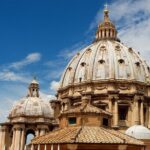
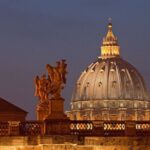
- St. Peter’s Square: the Vatican moment with an hour to breathe
- Piazza del Popolo: a “people square” with an ancient doorway vibe
- Pantheon in 20 minutes: what to look for fast
- Spanish Steps plus Keats and a tea room moment
- Foro Romano: the ancient center before you chase the modern crowd
- What to do about tickets, entrances, and the no-guide reality
- Who this tour suits best (and who should look elsewhere)
- Should you book this private Rome driving tour?
- FAQ
- How long is the tour?
- Where does the tour start?
- Is this a private tour?
- What’s included in the price?
- Are attraction tickets or entrance fees included?
- Is a tour guide included?
- Can I get a refund if I cancel?
- Are service animals allowed?
Key takeaways before you go
- Private comfort: air-conditioned vehicle plus pickup/drop-off makes a big difference in Rome heat and traffic.
- Driver-led info: since there’s no guide included, your driver’s communication can make or break the experience.
- Best-for-a-half-day plan: built for seeing lots of landmarks in 4 hours with short independent time at each stop.
- Tickets not included: plan for self-entry decisions (even if some stops are listed as free).
- Civitavecchia-friendly: start point at the Port of Civitavecchia suits cruise day timing.
- Review signal: one driver was praised for being helpful and well informed; others flagged language issues and one no-show.
Private Rome by car: comfort, control, and less stress
Rome is great at speed—until you hit the real world: traffic, lines, and the constant question of where to stand. This tour trades walking time for vehicle time, which is exactly what you want if your day is short or your energy is limited. You’ll ride in an air-conditioned minivan or coach, then step out at the places that usually eat up the most time when you go on your own.
Since it’s private, you’re not herded. It’s just your group, and that helps when you’re traveling with different interests—someone wants photos now, someone else wants to read plaques, and nobody wants to play sprint-chase with strangers.
One detail that I appreciate from a planning standpoint: pickup and drop-off are included, and the tour starts at the Port of Civitavecchia at 9:00am. If you’re docking and want Rome without spending your morning figuring out trains and transfers, this structure is built for you.
Other private Sistine Chapel tours in Vatican City
Price and value: what $145.18 buys (and what it doesn’t)
At $145.18 per person for about 4 hours, you’re paying for convenience and the private ride, not for a museum-grade guided lecture package. Included in the price are the private tour, fuel surcharge, and transport by air-conditioned vehicle, plus hotel pickup and drop-off.
What’s not included is equally important: food and drinks, tickets/entrance fees for attractions, and a tour guide. That doesn’t mean you’ll never go inside anything—it means you should expect to decide what you enter yourself, and you’ll pay those costs separately.
So the “value” depends on your style. If you want a stress-free route that gets you to the big names—fast—and you’re happy doing some reading on your own, it can feel like a good deal. If you want a full-on guide telling stories as you walk, you may feel like you’re missing something.
How the 4-hour route is paced: short stops with room to look
This is a half-day driving tour with set sightseeing windows. In practice, that means you’ll see a lot from the outside, and you’ll get enough time to reset your eyes and take in each landmark—then move on quickly.
Traffic and timing can shift the exact flow (the duration of transfers is approximate), so I’d treat the schedule as a framework, not a promise. The good news is that the stops are mostly at iconic, walkable points: fountains, squares, and major architectural landmarks where you can get the full visual impact fast.
Also: the itinerary includes time to see sights independently, which matters. You’re not spending the whole ride in a lecture, and you’re not losing every minute to group logistics. You’ll step out, look, take photos, and come back when your time is up.
Piazza Navona and Bernini’s Four Rivers: baroque drama in 30 minutes
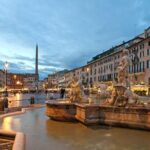
Your first stop is Piazza Navona, a showpiece square shaped by Baroque Rome. This isn’t just a postcard—this place was transformed into a major public space after the city market moved there in the late 15th century. Under the pontificate of Innocent X (1644 to 1655), the square became a stage for serious power and serious art.
The centerpiece is the Fontana dei Quattro Fiumi—the Fountain of the Four Rivers—designed by Gian Lorenzo Bernini and finished in 1651. The fountain is topped by the Obelisk of Domitian, brought in pieces from the Circus of Maxentius. If you look closely while you’re standing there, you’ll start to see how everything is staged like theater: sculpture, stone, and the politics of grandeur all stacked into one view.
You’ll have about 30 minutes here with admission listed as free. That’s enough time to circle the square once, grab photos from a couple angles, and still be ready to move on. The only drawback is that you can’t do a deep architectural study in this timeframe—so I’d focus on one big thing: the fountain system and the nearby churches, then let your brain store it as “Baroque control room” rather than “museum tour.”
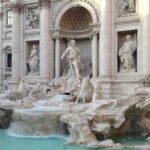
Trevi Fountain: the aqueduct story you can feel in your feet
Next is Fontana di Trevi, where the water is famous and the water logic is even better. The fountain sits at a road junction—three roads, or tre vie—and it ties into the revived Aqua Virgo (the ancient system known for supplying water to ancient Rome).
Here’s the cool idea: Roman engineers reportedly found a source of pure water about 13 km (8 miles) from the city in 19 BC, with the famous legend involving a virgin. Even if you treat the legend as folklore, the aqueduct is the backbone of the story. The aqueduct’s route ended up longer—about 22 km (14 miles)—before feeding the Baths of Agrippa for centuries.
You get about 30 minutes. That’s just enough time to do the essentials: see the façade, find your favorite angle, and toss in a coin if that’s your thing. The real “practical” tip is to arrive ready for crowds in the open plaza vibe—this is one of the busiest places in Rome. If you want calm, choose a spot that gives you a view of the fountain without having to constantly fight for shoulder space.
Other Sistine Chapel + Colosseum combo tours in Vatican City
St. Peter’s Square: the Vatican moment with an hour to breathe
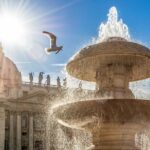
St. Peter’s Square is the longer stop—about 1 hour—so you’re not just doing a 10-minute photo sprint. This is where you’ll feel the scale of Vatican City as a symbol, even if you’re not in the mood to go inside every building.
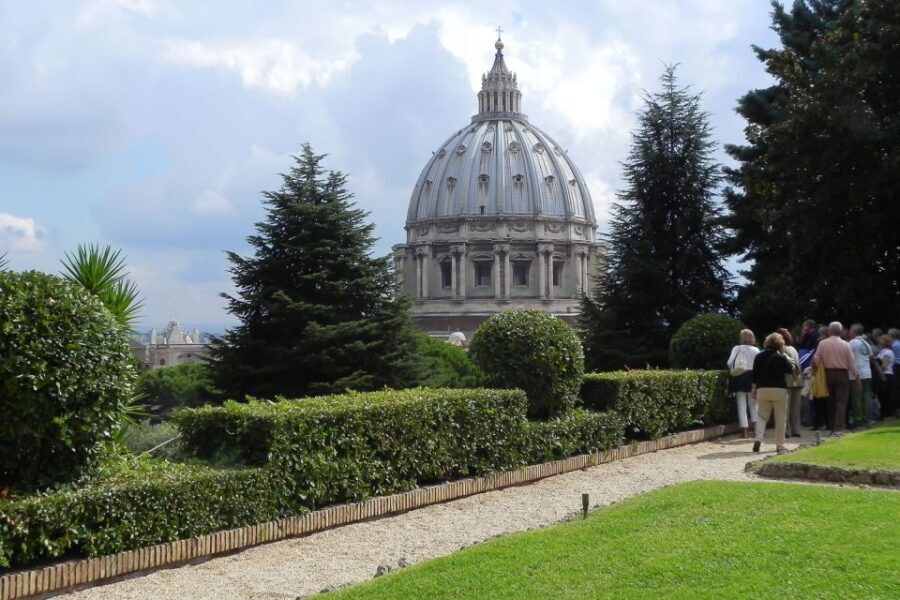
Even if you’re only viewing from the square, the story matters. The Basilica of St. Peter is Renaissance style, and it’s shaped by several major architects named in the tour info: Donato Bramante, Michelangelo, Carlo Maderno, and Gian Lorenzo Bernini. The whole complex is considered one of the holiest Catholic shrines and the largest church in the world, which is a mind-bend even before you step anywhere near the interior.
Because admission is listed as free for this stop, you can plan your time without ticket pressure. Use the hour like this: stand where the view opens up, then walk a bit so the angles of the square make sense. If you’re the kind of person who likes to locate yourself mentally—your brain will do it here. If you’re not, just take in the space and let it hit you.
Piazza del Popolo: a “people square” with an ancient doorway vibe
After the Vatican, you’re sent to Piazza del Popolo, translated as People’s Square. The name actually traces back to poplars (populus in Latin and pioppo in Italian), and the nearby Santa Maria del Popolo gives the square its corner anchoring.
This piazza also sits at a northern gate in the Aurelian Walls—Porta Flaminia in ancient Rome, now called Porta del Popolo. That matters because it connects you to the road system: this was the start of the Via Flaminia heading toward Ariminum (modern Rimini). Long before railroads, it was literally a first big view of Rome for travelers arriving from the north.
You’ll have about 20 minutes. In that time, I’d focus on two things: the gate-and-road feeling of the space, and the way the square has carried heavy events for centuries, including public executions (the last one noted happened in 1826). It’s not gloomy—it’s just history you can see.
Pantheon in 20 minutes: what to look for fast
Next is the Pantheon, one of Rome’s most compelling buildings because it’s both ancient and still living as a church. You’ll get about 20 minutes, with admission listed as free in the tour info, which makes it a great stop when you want architecture without extra ticket planning.
The tour framing here is strong: the earlier temple was commissioned by Marcus Agrippa during Augustus’s reign, then the current structure was completed by Hadrian and probably dedicated around 126 AD. The inscription point is a detail worth holding onto: Hadrian didn’t inscribe his own message, instead keeping Agrippa’s older inscription after the temple burned down.
Structurally, it’s a cylinder with a portico of large granite Corinthian columns. The description notes eight columns in the front row, plus two groups of four behind—so even quickly, you can “count and locate” what you’re seeing. In a short stop, that’s the difference between vague awe and real understanding.
The only drawback of a 20-minute timeframe is that you might not get enough time to fully experience any interior atmosphere if you want to linger. Use your time to capture the geometry—the dome-crown shape, the columns, and the entrance rhythm—then move on. Your future self will thank you later.
Spanish Steps plus Keats and a tea room moment
The Spanish Steps stop is about 20 minutes, and it includes the Fontana della Barcaccia in the square area. This fountain dates to the beginning of the Baroque period and is sculpted by Pietro Bernini, with assistance from his son Gian Lorenzo Bernini—so the family connection to Rome’s art machine continues.
On the edges of this area, you get a literary twist. The house of English poet John Keats sits at the right corner of the Spanish Steps. Keats lived there until his death in 1821, and today it’s a museum dedicated to him and Percy Bysshe Shelley, featuring books and memorabilia from English Romanticism. On the left corner is Babington’s tea room, founded in 1893.
In 20 minutes, I’d treat this stop as a “tone shift.” You go from stone giants and aqueduct water stories into a human-scale scene: poets, tea, and stairs that show up in every Rome film. If you want a calm photo, aim for a moment when you’re not stuck in the densest foot traffic flow.
Foro Romano: the ancient center before you chase the modern crowd
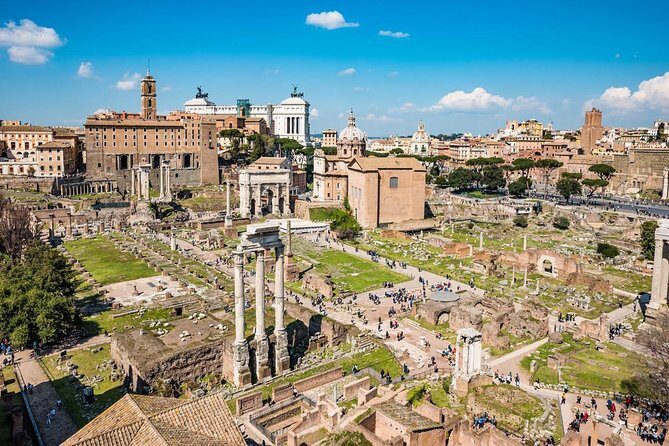
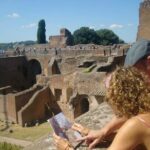
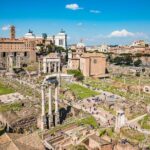
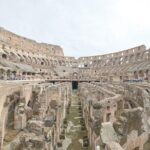
Your final major stop is Foro Romano (the Roman Forum), with about 45 minutes. This is where the tour’s “ancient Rome” promise becomes literal. The Forum was surrounded by ruins of important government buildings and served as the day-to-day center of the city.
It started as a marketplace, and citizens called it the Forum Magnum—Forum for short. For centuries it hosted triumphal processions and elections. It was also where public speeches happened, criminal trials took place, and even gladiatorial matches were staged. Add the commercial nucleus, plus statues and monuments for major citizens, and you get why the Forum is often described as the meeting place of ancient Rome.
Forty-five minutes is a fair amount of time if you use it correctly. Don’t try to “learn everything.” Instead, look for the layout logic: open areas, the sense of movement, and where major civic life would have played out. If you’re the type who likes to connect the physical space to the idea of government, law, and public spectacle, you’ll enjoy this stop the most.
And if you’re worried about pacing: this is one of the few stops here where you can slow down a little. It’s also the one where you’ll feel the difference between seeing ruins on a screen and seeing them in real air.
What to do about tickets, entrances, and the no-guide reality
Because a tour guide isn’t included and tickets/entrance fees aren’t part of the price, you’ll want to think about your plan before you step out of the vehicle. The tour is excellent for orientation and getting you to the right places fast, but it’s not meant to replace independent ticketing decisions.
A practical way to handle it:
- Decide in advance which places you want to enter versus just view from outside.
- Use the time blocks you’re given for photos and quick observations, then enter only if you’re confident about timing and costs.
- When your driver explains something, write down key names and go verify details later in your own time.
The reviews show the driver quality can vary. When you get a helpful, well informed driver, the whole day feels like it clicks. When the driver’s English is limited, you’ll have to lean on your own reading and map instincts to get the most out of the stops.
Who this tour suits best (and who should look elsewhere)
This is a strong fit if you:
- Want a private Rome day without the stress of public transport.
- Are on a cruise day and need a schedule that starts at Civitavecchia.
- Prefer seeing many key landmarks quickly, with time to wander independently.
- Appreciate comfort in an air-conditioned vehicle more than long walking routes.
It may not be ideal if you:
- Need a guide for deep explanations and spoken English narration.
- Want a tour where every major stop includes timed ticket entry.
- Are nervous about last-minute communication, given the mixed review signal about driver presence and language.
If you’re the DIY history type and you’re comfortable deciding on entrances yourself, this can be a very workable way to get a lot of Rome in one half-day.
Should you book this private Rome driving tour?
I’d book it if your goal is simple: get to Rome’s biggest icons efficiently, stay comfortable, and use the stop time for your own pacing. The biggest win is the private ride and the tight, hit-the-essentials structure, especially with pickup and the Civitavecchia start.
I’d hesitate if you specifically want a guided, story-heavy experience with a guaranteed English-speaking guide. Since tickets and a guide aren’t included, you’re betting on your driver’s ability to communicate and on your own plan for entrances.
My final check before booking: confirm pickup details early, and be ready to manage tickets separately. If you do that, you’ll likely end up with a memorable half-day that feels like Rome’s greatest hits—without the day getting away from you.
FAQ
How long is the tour?
The tour is about 4 hours (approx.).
Where does the tour start?
It starts at the Port of Civitavecchia with a start time of 9:00am.
Is this a private tour?
Yes. It’s private, and only your group participates.
What’s included in the price?
The price includes the private tour, fuel surcharge, hotel pickup and drop-off, and transport by air-conditioned minivan or coach. You also get a mobile ticket.
Are attraction tickets or entrance fees included?
No. Tickets/entrance fees for attractions are not included in the tour price.
Is a tour guide included?
No. A tour guide is not included in the price.
Can I get a refund if I cancel?
Free cancellation is available. You can cancel up to 24 hours in advance for a full refund.
Are service animals allowed?
Yes, service animals are allowed.