REVIEW · VATICAN CITY
Vatican Museums & Sistine Chapel Semi-Private Tour
Book on Viator →Operated by Rome Group Tours · Bookable on Viator
Three hours later, the Vatican feels manageable.
I like how this semi-private tour keeps things moving—skip-the-line entry means you get inside faster and start seeing the important stuff right away. I also love the practical touch of included headsets, so your guide’s explanations land clearly even when you’re surrounded by crowds.
You’ll spend about 2.5 hours in the core sites: Vatican Museums (including major galleries and Raphael’s rooms), then the Sistine Chapel, and finally an intro to St. Peter’s Basilica with time to explore on your own. The group is capped at 6 travelers, which helps the pace stay human enough to actually understand what you’re looking at.
One possible drawback: because the itinerary is timed, the tour can feel brisk—this is not the slow, wander-until-you-feel-like-it Vatican day.
In This Review
- Key takeaways
- Why this Vatican tour makes the Sistine Chapel day easier
- Vatican Museums highlights: Maps, courtyards, and the rooms people remember
- Raphael Rooms (Stanze di Raffaello): what to look for besides famous frescoes
- Sistine Chapel: how to handle silence and still understand what you see
- St. Peter’s Basilica: guided orientation plus your own roam time
- Headsets and the small-group setup: why this feels different from mass tours
- Price and value: why $92 can be worth it here
- What to wear and bring so you don’t lose time at security
- Timing, check-in, and making the tour day run smoothly
- Who should book this semi-private Vatican combo?
- Should you book this Vatican Museums & Sistine Chapel semi-private tour?
Key takeaways
- Skip-the-line entry gets you into the Vatican Museums and then onward without the usual ticket-buying bottleneck.
- Headsets included make art and symbolism explanations easy to follow in loud, crowded halls.
- Raphael Rooms focus points you to the frescoes that carry the rooms’ big ideas (theology, politics, philosophy).
- Sistine Chapel context first means you know what you’re seeing before you’re forced into silence.
- St. Peter’s Basilica wrap-up time lets you shift from guided viewing to your own pace—especially around famous works like Michelangelo’s Pietà.
- Group size stays small (maximum 6), so questions and listening stay realistic.
Why this Vatican tour makes the Sistine Chapel day easier
The Vatican can be a patience test. Lines can stretch, ticket desks bottleneck, and suddenly your “I’ll be there early” plan doesn’t feel so smart. This tour is built to cut that stress with time-saving access so you’re not spending your best daylight standing still.
What you’re paying for is simple: someone gets the sequencing right. You meet near the Vatican Museums, walk in with your guide, and move quickly through the main spaces that most people come for. If your goal is to see the big three—Vatican Museums, Sistine Chapel, and St. Peter’s Basilica—without losing half a day to queues, this format fits.
This is also where the small-group setup matters. A group of up to 6 doesn’t magically make the Vatican quiet (nothing does), but it helps your guide keep control of the flow. That means you spend more time looking up and reading details instead of waiting for the whole pack to catch up.
If you're still narrowing it down, here are other tours in Vatican City we've reviewed.

Vatican Museums highlights: Maps, courtyards, and the rooms people remember
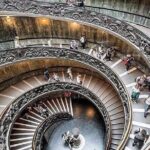
Your tour begins in the Vatican Museums, the sprawling collection that can overwhelm you if you go in alone. Here, you’re not expected to “see everything.” Instead, you’re guided to the big landmarks that give you a feel for how the Vatican built its art collection over centuries.
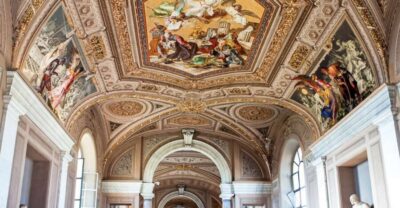
One standout stop is the Gallery of Maps, a long corridor lined with intricately painted maps of Italy’s regions. It’s not just decorative. It’s a snapshot of 16th-century thinking about geography and power—useful context when you realize how much Vatican collecting and influence were tied to Europe’s political map.
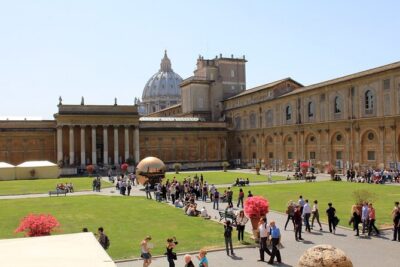
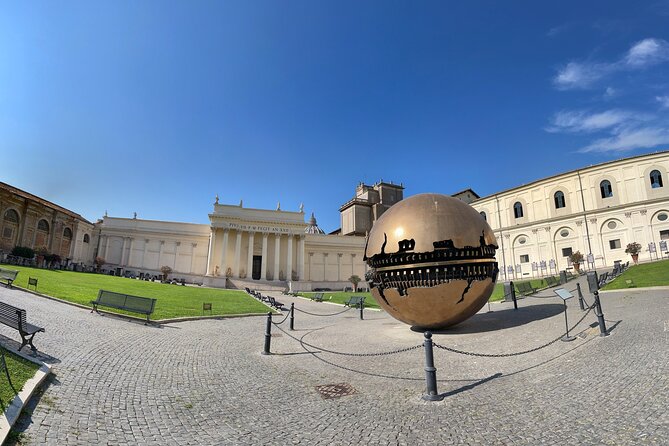
You’ll also run into the Pinecone Courtyard, an outdoor break that helps your brain reset. The centerpiece is the Fontana della Pigna (Pinecone Fountain), a monumental classical piece that feels a little surreal once you’ve been indoors with ceiling after ceiling.
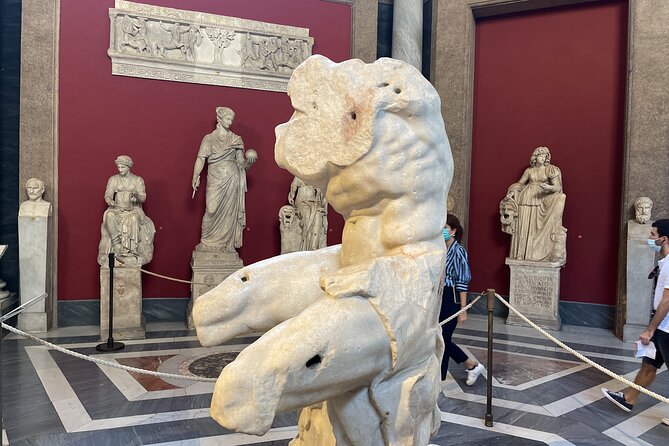
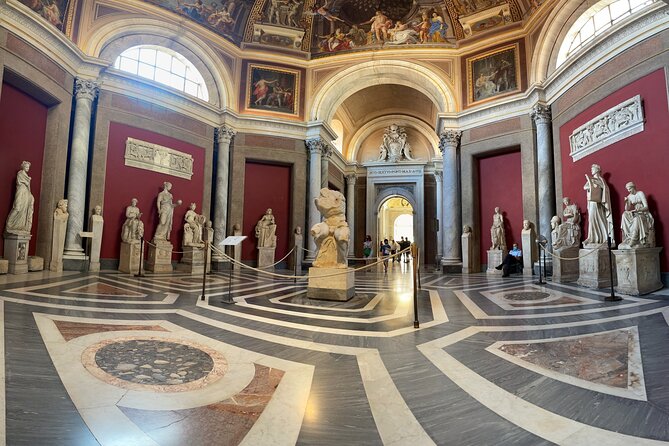
Then come the museum’s classical and Renaissance highlights: statues and masterpieces that connect older Roman art traditions with what the Vatican later used to legitimize its cultural authority. If you care about art, these transitions matter. If you don’t, they still matter—because you’ll start noticing the visual “rules” the Vatican uses to tell stories.
Raphael Rooms (Stanze di Raffaello): what to look for besides famous frescoes
A big reason people love this tour is the way it treats the Raphael Rooms like more than just a checklist stop. These chambers—Stanze di Raffaello—were Pope Julius II’s private apartments, and the frescoes don’t just show pretty painting. They connect ideas: faith, philosophy, history, and politics, all mixed together like the Vatican didn’t believe art should be neutral.
Your guide points you to major rooms such as:
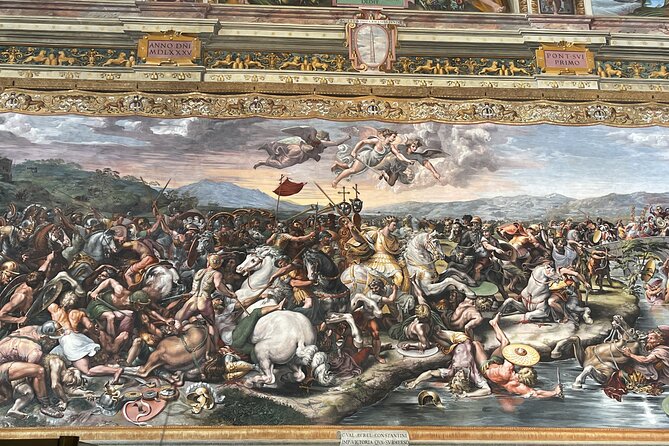
- The Hall of Constantine, where scenes like The Battle of the Milvian Bridge show rulers using religious framing to justify power.
- The Room of Heliodorus, including The Expulsion of Heliodorus, built around the idea of divine intervention.
- The Room of the Signatura, home to The School of Athens, which gives you the High Renaissance obsession with classical thought—plus the Vatican’s ability to claim philosophy as part of its own story.
There’s also the Room of the Fire in the Borgo, focused on papal history. That’s a key theme in these rooms: the artwork is communicating legitimacy. If you’ve ever wondered why so many Vatican images look like they’re arguing a point, this is where you start to see it clearly.
A practical note: the Raphael Rooms are visually dense and easy to rush. With a guide and headsets, you’re more likely to catch the meaning behind what you’re looking at, even when you’re moving at tour speed.
Sistine Chapel: how to handle silence and still understand what you see
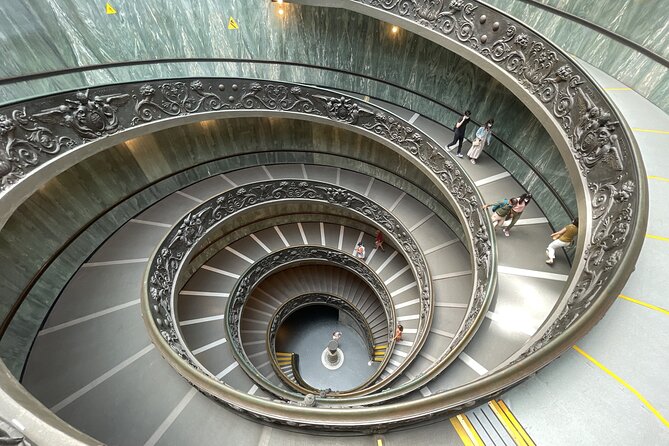
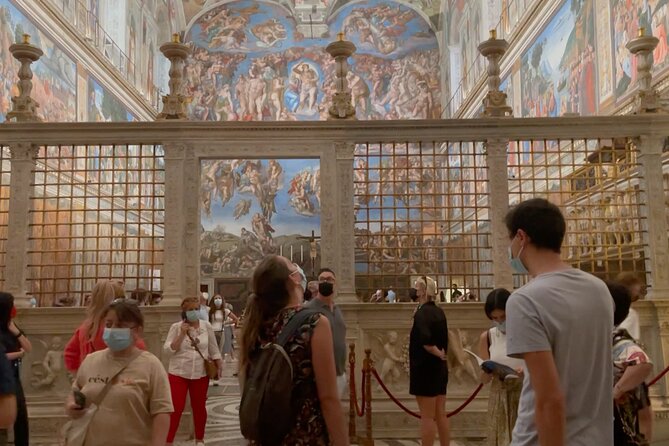
The Sistine Chapel is famous enough that it can feel like you’re walking into a museum exhibit about a museum exhibit. Then you step inside, and the scale hits you. This is why the tour’s pre-Chapel explanation is valuable. You hear what to look for before you’re asked to follow strict silence.
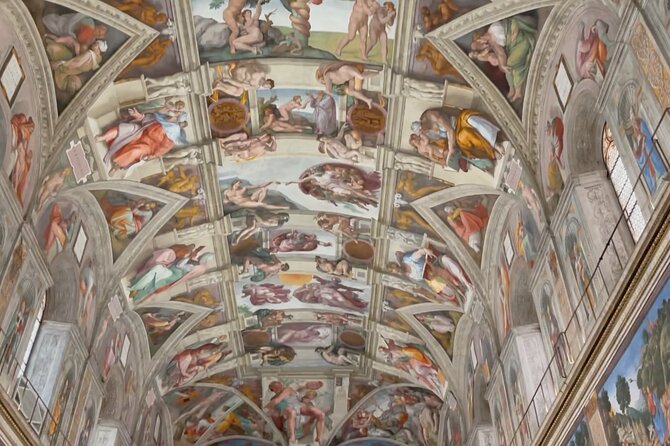
Once you enter, you’ll want to pay attention to the composition. Michelangelo’s ceiling is arranged like a system—biblical stories told through panels that connect to one another. Your guide sets up the backstory, including difficulties between Michelangelo and his patron, Pope Julius II. That matters, because it turns the artwork from just “big masterpiece” into a picture made under pressure and politics.
You’ll also focus on icons like the Creation of Adam, which people photograph constantly for a reason. Seeing it with context is different: you notice how the ceiling panels guide your eye and how the symbolism layers across sections. You’ll also take in the Last Judgment, another defining image where the emotional intensity is the point.
Timing matters here. The chapel experience isn’t long, and the rules (silence, crowd flow) limit how long you can stand in one spot. Still, the payoff is strong when you walk in already knowing what the ceiling structure means instead of guessing.
St. Peter’s Basilica: guided orientation plus your own roam time
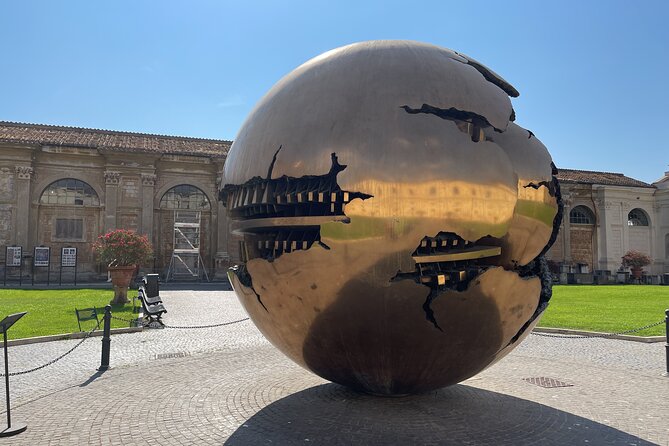
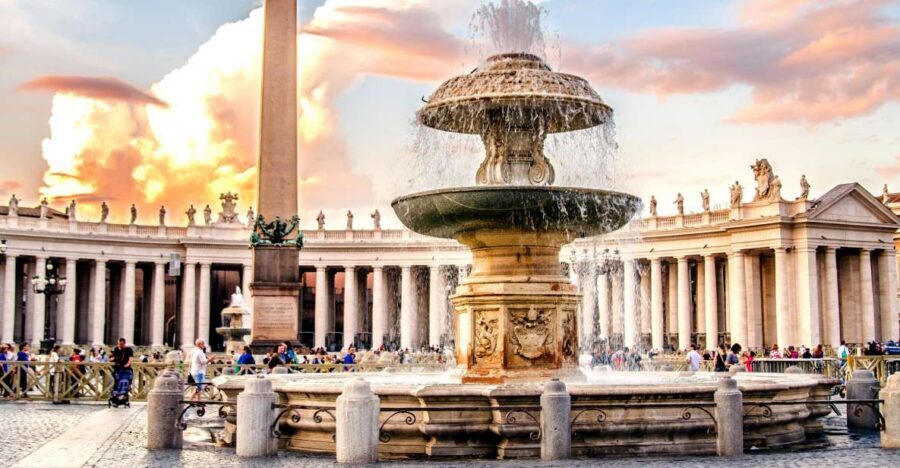
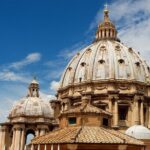
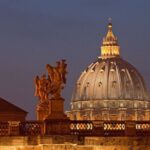
St. Peter’s Basilica is where many people expect pure awe, and they don’t leave disappointed. This tour gives you a quick guided intro—your guide highlights key areas and famous works, including Michelangelo’s Pietà—and then you get time to explore on your own.
That “guided first, wander next” structure works well because you can split your attention. In the guided portion, you learn where to look and what features represent. Then on your own time, you can slow down where you personally care most—whether that’s architecture, sculpture details, or just standing back to take in the scale.
One smart planning detail: your St. Peter’s stop depends on it being open for visitors on your day. That’s not something you control, but it’s a real factor in whether your day feels complete. If you’re counting on seeing specific interior highlights, it’s worth keeping your expectations flexible.


Headsets and the small-group setup: why this feels different from mass tours
Crowds in the Vatican aren’t just annoying—they ruin learning if you can’t hear. This is one of the most practical parts of the tour: headsets are included. That means your guide can give art and context explanations without you constantly craning toward the person speaking.
The tour also caps at a maximum of 6 travelers, which affects how the experience plays out. In a big group, the guide can’t pause much, and you spend your time trying not to get separated. In a smaller group, it’s easier to stay together and easier to absorb details. You’re also less likely to feel like you’re on a moving conveyor belt that doesn’t care if you look.
The tradeoff is pace. This is not a slow museum stroll. The Vatican is too busy, and the tour is designed to cover multiple major sites within a short window. Expect to move efficiently and to take photos quickly between key moments.
Price and value: why $92 can be worth it here
At $92, you’re buying three forms of value:
1) Saved time (skip-the-line entry at major points)
If you’ve ever watched a long Vatican line swallow an afternoon, you know how expensive time feels when it’s stuck. Skip-the-line access can genuinely change your day.
2) Guided interpretation
Vatican art is dense. A good guide doesn’t just point out what’s famous; they explain why it exists and what it’s trying to say. That turns “I saw a ceiling” into “I understand why this ceiling is staged the way it is.”
3) Included essentials
The tour lists entrance fees included plus headsets. Those add up if you’re planning everything separately, and they remove decision fatigue when you want the day to run smoothly.
The only time this might not feel like a bargain is if you prefer total freedom and you’re comfortable navigating without help. But if you want a structured hit of the Vatican’s core masterpieces with less waiting, this price is easier to justify.
What to wear and bring so you don’t lose time at security
The Vatican’s rules are strict, and they’re not the kind you want to figure out at the last minute. Make your life easier before you leave your hotel.
Dress code: shoulders and knees must be covered. Plan on lightweight layers in warm weather and bring something that covers without overheating.
ID requirement: Vatican tickets are non-transferable and tied to the name on your booking. You need a qualifying ID (passport, driver’s license, or official national ID card), and the name must match exactly. Photocopies or digital versions don’t count here.
Bags and backpacks: large bags may not be permitted inside the Vatican Museums. If you can travel light, do it. You’ll also want to treat packing like airport security—no prohibited items.
Water: you can bring a water bottle, and there are free water fountains to refill it. That’s a small thing, but it makes a big difference when you’re walking a lot on uneven schedules.
Physical comfort: the tour notes a moderate physical fitness level. You’ll be doing a fair amount of walking inside major complexes, so plan comfortable shoes.
Timing, check-in, and making the tour day run smoothly
The tour starts at 1:30 pm and runs about 3 hours total (with roughly 2.5 hours of guided touring). That schedule matters because you’ll want to arrive early enough to avoid stress.
Check-in closes 15 minutes prior to departure, and departures are on-time. If you arrive late, you may not be able to join, and the tour notes no refunds or exchanges if you arrive after the departure time. It’s the kind of policy that sounds harsh until you’re standing in line watching the group leave.
Because this is a mobile-ticket experience, you should make sure your phone is charged and ready before you head out. Also, keep your day organized: it’s a concentrated afternoon plan, so don’t schedule something complicated right after the tour ends.
Who should book this semi-private Vatican combo?
I’d lean toward booking if you want:
- Skip-the-line access and a guided path through the highest-demand areas
- The ability to understand the Sistine Chapel beyond famous images
- A structured day that still leaves you with independent time in St. Peter’s Basilica
- A smaller group experience (max 6), not a massive tour with noise and chaos
You might skip it if you’re traveling with total freedom as your top priority, or if you’re the kind of traveler who likes to spend half a day in one museum room with no schedule pressure. This tour gives you key stops and meaning, but it’s still a paced itinerary.
If you’re short on time in Rome or you’re visiting during a busy season, the value becomes even clearer. This is one of those days where planning saves you from boredom and frustration.
Should you book this Vatican Museums & Sistine Chapel semi-private tour?
Yes, I’d book it if your priority is seeing the big masterpieces with less waiting and better context. The combination of skip-the-line entry, included headsets, and a guide who explains how the art connects to religion, politics, and storytelling makes this tour feel like more than a ticket bundle.
The main thing to decide is whether you can handle a brisk schedule. If you want a slow, open-ended Vatican day, go self-guided. If you want an efficient, guided “greatest hits” route that still helps you look smarter, this is a strong choice.