REVIEW · ROME
Rome: Vatican Museums & Sistine Chapel Tour & Priority Entry
Book on Viator →Operated by Art Ticket & Tour · Bookable on Viator
Raphael and the ceiling in two hours. This Vatican Museums and Sistine Chapel tour gives you a smart route through the busiest areas, with priority entrance so you spend more time looking and less time waiting. You’ll follow an accredited Vatican official guide in English, hitting the art that most people only skim when they go on their own.
I really like two things about this experience. First, the focus on the big, unforgettable stops: the Raphael Rooms (including the School of Athens) and the museum highlights that set you up for Michelangelo in the Sistine Chapel. Second, the guided pacing helps you understand what you’re seeing, especially in places like the Gallery of Maps and the classical sculptures in the Pio-Clementine Museum.
One thing to keep in mind is timing. The tour is about 2 hours, so you shouldn’t expect long breaks to sit with every single masterpiece. If you’re the type who likes to stop and read every label, plan to come back another day—or keep your expectations tight and enjoy the highlights with the guide.
In This Review
- Key things to know before you go
- Why priority entry at the Vatican is worth it
- Meeting point on Via Vespasiano 71 (and where you finish)
- What happens in the Vatican Museums before the Sistine Chapel
- Raphael Rooms: School of Athens and the meaning behind the paint
- Pio-Clementine Museum: Laocoön and Apollo of Belvedere
- Gallery of Maps: a 16th-century view of the world
- A Leonardo da Vinci stop tied to a Bible scene
- Sistine Chapel: Michelangelo’s frescoes at the end
- Small group size: why it feels easier than it sounds
- English guide inside Vatican Museums (what that changes)
- Price and value: is $119.21 a good deal?
- Who should book this tour?
- Should you book Rome: Vatican Museums & Sistine Chapel with priority entry?
- FAQ
- How long is the Vatican Museums and Sistine Chapel tour?
- Is skip-the-line or priority entry included?
- What is included in the price?
- Where do I meet the guide?
- Where does the tour end?
- Is the tour offered in English?
- How many people are in the group?
- Do I need to follow any dress code for the Sistine Chapel?
- Can I cancel for a full refund?
Key things to know before you go
- Priority entrance helps you avoid the worst of the waiting, which matters at the Vatican
- Accredited English guide means explanations are built for the route, not random wandering
- Raphael Rooms + Pio-Clementine Museum give you two major art styles in one flow
- Gallery of Maps adds a surprising 16th-century view of the world
- Small group (max 15) makes the experience feel more controlled and answer-friendly
- Sistine Chapel focus keeps the finale on Michelangelo’s frescoes
Why priority entry at the Vatican is worth it
If you’ve ever tried the Vatican Museums without a plan, you already know the problem: lines and crowd flow can eat your time fast. This tour’s priority entrance is designed to protect your schedule, so you can get moving into the collection instead of losing your morning to queue math.
That time-saving matters even more because your total guided window is about 2 hours. You want that time spent inside, not glued to the back of a crowd. With a small group size capped at 15, you also get a steadier movement pace than you would in a giant bus group.
Other Sistine Chapel tours we've reviewed in Rome
Meeting point on Via Vespasiano 71 (and where you finish)
You’ll start at Via Vespasiano, 71, 00192 Roma RM, Italy. Getting there is fairly straightforward since the meeting point is noted as near public transportation, and a mobile ticket is provided. That combination is helpful because the Vatican area is all about efficient check-in.
The tour ends after the Sistine Chapel, with exits directed toward Viale Vaticana. So if you’re planning a follow-up (like St. Peter’s Basilica), think of this as a “wrap-and-walk” finish rather than a full-day Vatican plan.
What happens in the Vatican Museums before the Sistine Chapel
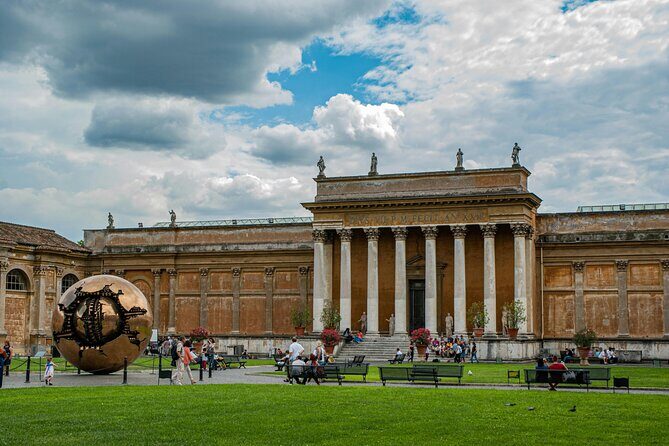
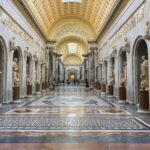
This is not a random museum walk. The route is built to make the finale hit harder. You start with major rooms and collections that shift your viewpoint—Renaissance painting, then classical sculpture, then historical cartography—before you reach Michelangelo’s ceiling.
That order is smart. It’s like warming up different parts of your brain, so when the Sistine Chapel opens up, you’re not just seeing famous art—you’re seeing it with context.
Raphael Rooms: School of Athens and the meaning behind the paint
The Raphael Rooms are a centerpiece stop. You’ll see the famous School of Athens, along with other Raphael masterpieces, and your guide will explain the meaning behind the works and how they connect to the Renaissance.
Here’s why that guided explanation is valuable: Raphael’s themes can feel “famous, but vague” if you don’t know what to look for. With an expert guide, you can focus on how art is communicating ideas—who the figures represent, how the composition signals the era’s thinking, and why these paintings became reference points for centuries of artists.
Practical note: The rooms can get crowded, and photo moments can be tempting. I’d treat your phone as a quick capture tool and let your eyes stay on the big picture while the guide is talking.
Pio-Clementine Museum: Laocoön and Apollo of Belvedere
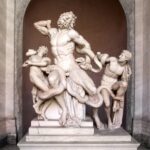
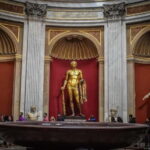
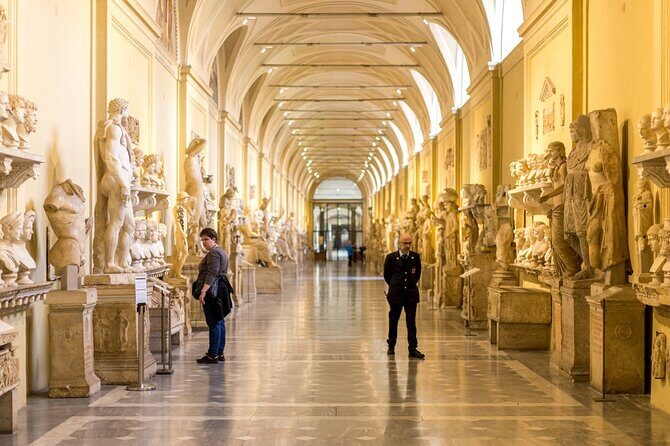
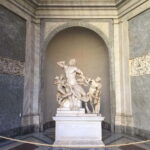
Next comes the Pio-Clementine Museum, which is where the Vatican flexes its classical-art muscles. You’ll encounter famous sculpture like Laocoön and the Apollo of Belvedere, plus stories about the history of these pieces.
This stop works well for first-timers because sculpture like this can feel distant unless someone explains what made it matter. Your guide’s job here is to connect the statues to their broader legacy—why people studied them, copied them, and kept them as touchstones for “classical” art.
If you’re a fan of ancient art, you’ll like this section. If you’re not, you’ll still appreciate it because the sculptures are visually intense, and the guide helps you read them faster than you could on your own.
Other Vatican Museums tours in Rome


Gallery of Maps: a 16th-century view of the world
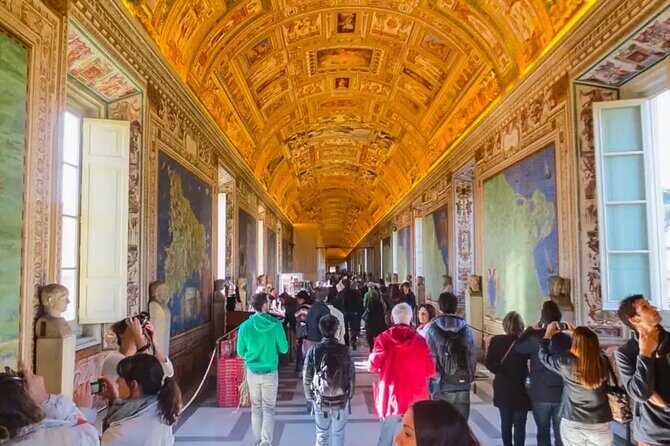
Then you get a stop that many first-time visitors skip: the Gallery of Maps. It features detailed topographical maps from the 16th century, with the guide explaining how people pictured the world back then.
This is the part that surprises you—in a good way—because it turns the Vatican from just “art and religion” into something more like a historical snapshot of knowledge. You’ll see how geography, power, and imagination all intersect in those old maps.
Consideration: The maps are more “look closely” than “look big,” so if you’re rushing, you might miss the fun details. Let the guide point out what to notice, and slow down for a couple of minutes.
A Leonardo da Vinci stop tied to a Bible scene
The route also includes a stop featuring Leonardo da Vinci, with the guide explaining his role in recreating an astonishing Bible painting from history. The important thing for you is not the exact label on the wall—it’s the guide’s framing, which ties the work to the religious story line and to why it’s remembered.
If you’re expecting to see a single iconic Leonardo painting that you’ve memorized from another museum, keep your expectations flexible. This stop is about context and interpretation within the Vatican route you’re doing in a fixed time slot.
Sistine Chapel: Michelangelo’s frescoes at the end
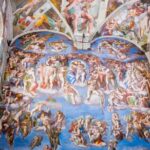
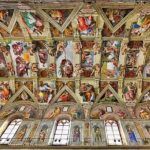
Finally, you reach the Sistine Chapel. This is where the experience really lands: Michelangelo’s frescoes are the main event.
In a short tour format, the key is focus. Don’t try to see everything at once. Let your guide set the tone—what you’re looking at, why it’s arranged the way it is, and what to notice as you scan the scenes. In the Sistine Chapel, your view shifts as you stand, move, and look up again. The guide helps you avoid the common trap of only catching a few famous moments and missing the connections between them.
Dress code matters. Based on on-the-ground advice from past tour comments, plan to cover shoulders and knees for the Sistine Chapel. Comfortable shoes also make a difference because you’ll be moving through rooms and corridors.
Small group size: why it feels easier than it sounds
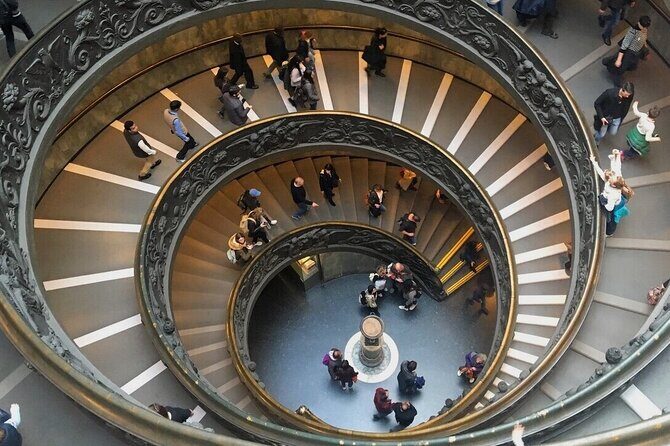
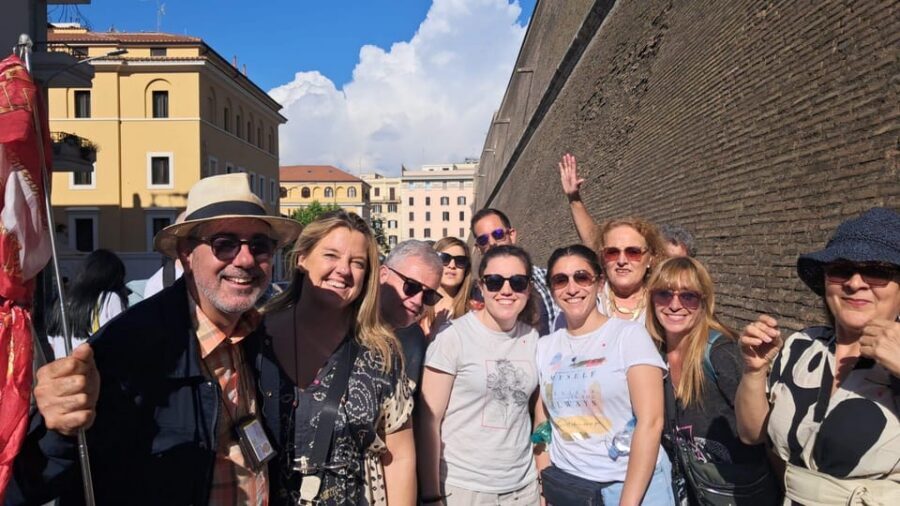
The max group size is 15 travelers, and that’s a big deal in the Vatican context. It’s enough people that you’ll still feel the energy, but small enough that your guide can keep track of the group and answer questions without losing the flow.
This is especially helpful in the moments when crowds surge or when you want to know what to look for next. A big-group tour can turn into a moving line. A small-group tour gives you a bit more breathing space, even inside packed rooms.
English guide inside Vatican Museums (what that changes)
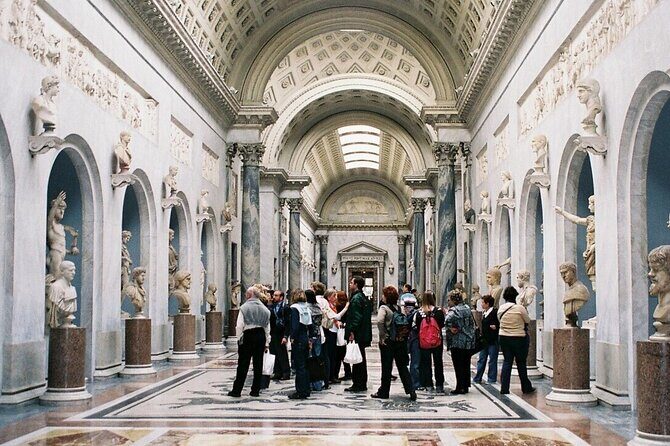
This tour is offered in English, and you get an accredited Vatican official English-speaking guide. That matters more than many people expect. The Vatican has a lot of symbolism, references, and history that can be confusing if you only read plaques on your own.
With a guide, you’re not just consuming facts. You’re getting direction: what details connect to Renaissance thinking, how classical sculpture fits into the broader art story, and why the museum route is built the way it is.
One tour tip I take seriously: if something feels rushed, it’s usually because the route time is fixed. The guide is still your best “filter,” because you can decide where to spend your attention instead of wasting energy figuring it out.
Price and value: is $119.21 a good deal?
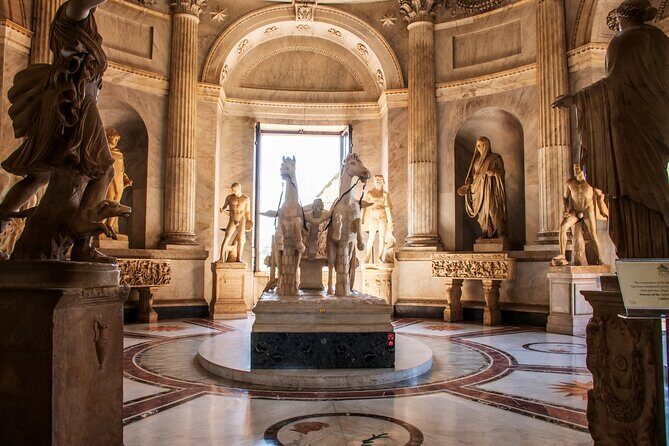
At $119.21 per person, this isn’t a budget experience. But it’s also not “just a ticket.” You’re paying for a package that includes:
- Skip-the-line/priority entrance
- A guided 2-hour route
- Admission ticket included
- An accredited Vatican official guide in English
- A small group format
For me, the value comes from protecting time. In the Vatican, time is the real currency. If you’re trying to do Vatican Museums and the Sistine Chapel in one tight window, priority entrance plus a real guide often beats spending hours navigating crowds and interpreting art on your own.
If you’re the kind of traveler who wants to linger for long periods, this might feel short. But if you want the essential masterpieces with guidance and a clear plan, the cost starts to make sense.
Who should book this tour?
This one fits best if you:
- Want the Vatican highlights without spending half your day managing queues
- Appreciate art history explanations that help you “read” what you’re seeing
- Prefer a smaller group experience (up to 15)
- Are doing Rome on a schedule and want the Sistine Chapel covered reliably
It may not be your best match if you:
- Need lots of free time inside each room for quiet, slow viewing
- Plan to use the tour time to also cover additional sites in depth (this tour ends after the Sistine Chapel)
Should you book Rome: Vatican Museums & Sistine Chapel with priority entry?
I’d book it if your goal is a strong, guided hit of the Vatican’s top rooms and you want to reduce stress. The priority entrance and the accredited English guide are the core reasons—this is the difference between seeing “a lot of stuff” and actually understanding what you’re seeing.
I’d skip or pair it with another plan if you know you’re the type who needs more than 2 hours to soak in every corner. In that case, consider doing a second visit on your own later, so you can slow down when the crowds are lower.
If you do book, go in with two simple game plans: wear comfortable shoes, and plan your outfit for the Sistine Chapel with covered shoulders and knees.
FAQ
How long is the Vatican Museums and Sistine Chapel tour?
The tour runs for about 2 hours guided time.
Is skip-the-line or priority entry included?
Yes. You get skip-the-line tickets and priority entrance to the Vatican Museums collection.
What is included in the price?
The tour includes an accredited Vatican official English-speaking guide, skip-the-line tickets, and a 2-hour guided tour. Admission is included.
Where do I meet the guide?
The meeting point is Via Vespasiano, 71, 00192 Roma RM, Italy.
Where does the tour end?
The tour ends after your Sistine Chapel visit as you exit the museum area on Viale Vaticana.
Is the tour offered in English?
Yes, it is offered in English.
How many people are in the group?
The maximum group size is 15 travelers.
Do I need to follow any dress code for the Sistine Chapel?
Yes. You should plan to cover shoulders and knees for the Sistine Chapel.
Can I cancel for a full refund?
You can cancel for a full refund if you cancel at least 24 hours before the experience’s start time. Cancellation is free.
More Skip-the-Line Tours at the Sistine Chapel & Vatican
- Skip-the-Line Group Tour of the Vatican, Sistine Chapel & St. Peter’s Basilica
★ 4.5 · 12,779 reviews
More Vatican Museums Tours at the Sistine Chapel & Vatican
More Sistine Chapel Tours at the Sistine Chapel & Vatican
- Skip-the-Line Group Tour of the Vatican, Sistine Chapel & St. Peter’s Basilica
★ 4.5 · 12,779 reviews