REVIEW · ROME
Wheelchair Accessible Vatican Museums & Sistine Chapel PrivateTour
Book on Viator →Operated by Nicom Tours · Bookable on Viator
Some places in Rome reward patience. The Vatican rewards planning—and this wheelchair-focused tour is built for it. I like how it keeps things step-free and organized, so you can focus on the art instead of logistics. I also love the skip-the-line start and the headset system, which makes the guide’s explanations easy to follow even in a loud, crowded museum.
Your guide leads you through key stops like the Pinacoteca and Chiaramonti Museum before you reach Michelangelo’s Sistine Chapel. That flow matters because the Vatican can feel like a maze when you can’t take the same routes as everyone else. One possible drawback: you still have to clear metal detectors (plan for a 20–30 minute wait), and the Vatican enforces a strict dress code—knees and shoulders covered—or you can be refused entry.
In This Review
- Key highlights worth your attention
- What this wheelchair Vatican Museums and Sistine Chapel tour really solves
- Price and value: what you’re paying for
- Meeting point, timing, and what to expect on arrival
- The step-free route promise, and what to keep in mind
- Stop 1: Vatican Museums highlights without the scramble
- A practical pacing tip
- Stop 2: Pinacoteca Gallery and what to look for
- Stop 3: Chiaramonti Museum and the power of sculpture
- Stop 4: Sistine Chapel, what your guide will do before you enter
- Headsets, Wi-Fi, bathroom access, and the small conveniences that matter
- Dress code and security: the two rules that can make or break your day
- Accessibility details: disability card requirement and the potential entrance fee
- Who this tour is best for (and who might skip it)
- What the guides are like, based on real experiences
- Should you book this wheelchair Vatican Museums & Sistine Chapel tour?
- FAQ
- How long is the wheelchair accessible Vatican Museums and Sistine Chapel tour?
- Is this tour private?
- Is the route fully step-free for wheelchair users?
- Do we get headsets to hear the guide?
- Are skip-the-line tickets included?
- Is St. Peter’s Basilica included?
- What dress code do I need for the Vatican Museums and Sistine Chapel?
- Do I need to show a disability identification card?
- What if I don’t meet the stated disability level requirement?
- How long should I plan for security with metal detectors?
- Is hotel pickup or drop-off included?
- Is food or drinks included?
Key highlights worth your attention
- Entirely step-free route designed for wheelchair users (with some Vatican areas still having elevator/stairs access outside the tour plan)
- Skip-the-line access to the Vatican Museums and Sistine Chapel showstoppers
- Headsets included, so you can hear the commentary clearly throughout the tour
- Pinacoteca Gallery + Chiaramonti Museum for big-hitters before the Sistine Chapel finale
- Small group size (max 10) for a more personal pace and better navigation
- Guides praised for wheelchair support, including names like Antonio, Ian, Davide, Monica, and Linda
What this wheelchair Vatican Museums and Sistine Chapel tour really solves
The Vatican is famous, but it’s also practical to be careful. Floors shift from smooth to uneven, crowds compress hallways, and “easy routes” can turn into bottlenecks fast. This tour is designed around one goal: help you see the highlights without spending your energy fighting stairs, slow queues, or confusing turns.
The other big win is the way the tour communicates. You get headsets so you can hear your guide without craning your neck or guessing what they’re pointing out. Several guides are specifically described as managing wheelchairs smoothly—Antonio is noted as accommodating a friend in a wheelchair, and Ian is described as pushing a wheelchair while keeping the tour efficient.
And because this is a private tour capped at 10 travelers, your guide can slow down when you need it. That can mean the difference between “we saw things” and “we actually understood what we saw.”
If you're still narrowing it down, here are other tours in Rome we've reviewed.

Price and value: what you’re paying for
At $2,845.99 per person, this isn’t the deal-hunter option. You’re paying for a specialized format: a guide who knows how to move you through the Vatican complex with wheelchair access in mind, plus skip-the-line tickets, plus headsets, plus time saved at one of the most crowded sites in Europe.
The value is strongest if you fit the tour’s sweet spot:
- You use a wheelchair or you have mobility limitations and want an easier route
- You want the guide’s explanations instead of trying to decode everything solo
- You’d rather pay more than spend your day in lines and detours
If you’re not dealing with mobility barriers, you might prefer a standard guided Vatican tour. But if accessibility and navigation are your top priorities, the price starts to make sense fast.
Meeting point, timing, and what to expect on arrival
You meet at Via Germanico, 8, 00192 Roma RM, Italy. The tour ends at Vatican Museums, 00120, Vatican City. That end point is important: you’re not automatically taken onward to St. Peter’s Basilica as part of this tour, though you can visit it independently after.
Plan around security. All visitors must pass metal detectors at the checkpoint, and you should expect 20–30 minutes to clear. The skip-the-line ticket helps with the entrance line for the museum, but security is still security.
You’ll also want to be ready for the strict dress code. Knees and shoulders must be covered for both men and women. It’s enforced, and entry refusal is possible if you show up wrong.
The step-free route promise, and what to keep in mind
The tour is described as having an entirely step-free route. That’s the headline you want if you’re planning for a wheelchair day in the Vatican. Still, a helpful reality check: the Vatican complex itself isn’t uniformly accessible everywhere. The tour is built to help you avoid problem sections.
Also, some practical limits show up in real life. One review notes that there can be a distance to reach wheelchair rental and mentions steep ramps. Another piece of advice from the reviews: if you need extra hands, bring a pusher. Even with an accessible route, some stretches may require support depending on your chair and your stamina.
Stop 1: Vatican Museums highlights without the scramble
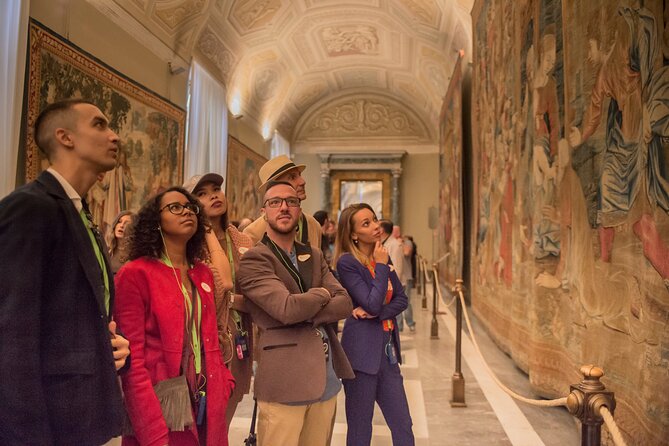
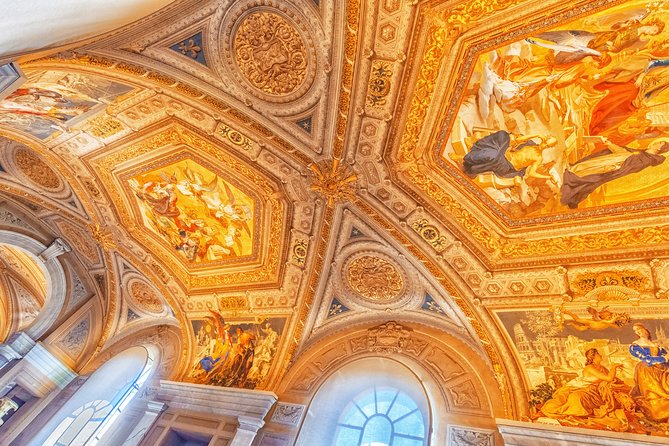
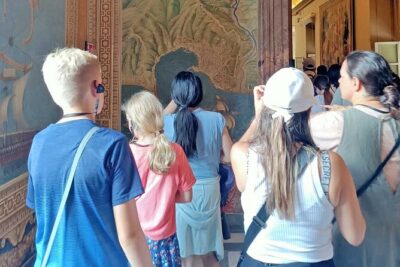
The Vatican Museums portion runs about 2 hours 30 minutes. Your guide starts you with fast-track entry and the skip-the-line ticket, then pushes you toward the major collections with commentary through headsets.
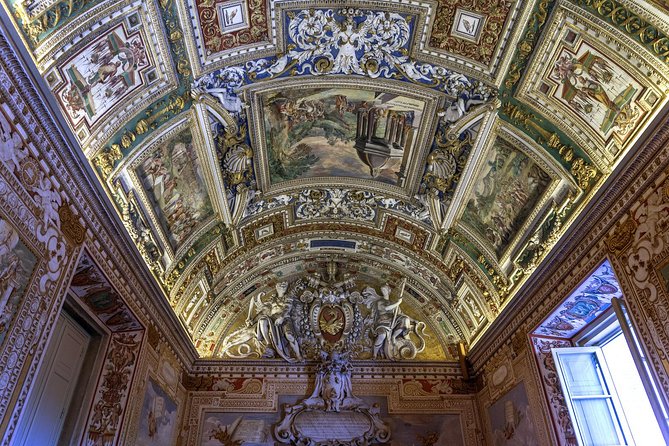
You’ll see standout galleries that help you understand what the Vatican is about beyond the Sistine Chapel. The museums include rooms such as:
- Gallery of the Maps
- Gallery of the Tapestries
- Major Renaissance works, including pieces like Raphael’s The Transfiguration, Caravaggio’s Deposition from the Cross, and Da Vinci’s unfinished St. Jermone
Why this order works: it gets you into the Vatican’s rhythm before the Sistine Chapel. If you go to the chapel first, the museums can feel like a warm-up you rush through. Here, you build context—history, patrons, and the look and feel of the Vatican’s collection—so the chapel lands harder.
- Skip-the-Line Group Tour of the Vatican, Sistine Chapel & St. Peter’s Basilica
★ 4.5 · 12,779 reviews


A practical pacing tip
This tour ends the Vatican Museums visit and then continues to the Sistine Chapel. If you’re sensitive to long indoor distances, plan your bathroom timing before you transition. Bathroom access is included, but you still want to use it strategically.
Stop 2: Pinacoteca Gallery and what to look for
After entering, you start at the Pinacoteca Gallery. This part is where the Vatican Museums shift from big spectacle to focused storytelling through paintings.
You’ll learn how the gallery was created for Pope Pius XI, and you’ll get guided context for the paintings you see. The tour specifically calls out works such as Raphael, Caravaggio, and Da Vinci—names you already know, but with explanations you can actually connect to what you’re looking at.
The Pinacoteca can be a relief for wheelchair visitors because it’s easier to “stay in place” visually than in some sprawling halls. You’re still moving, of course, but your brain gets a break from constant crowd pressure.
Stop 3: Chiaramonti Museum and the power of sculpture
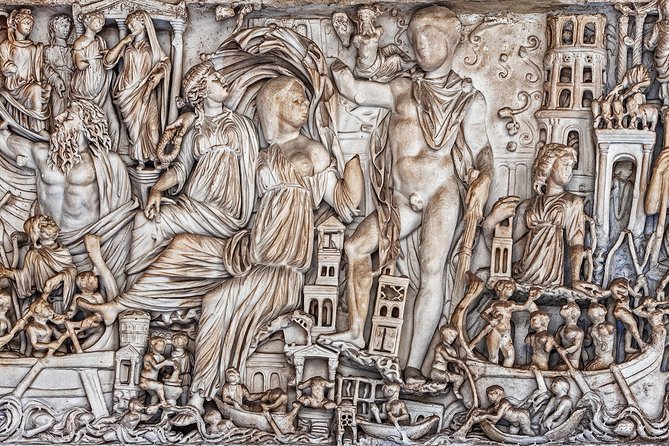
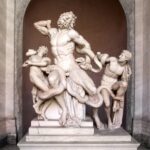
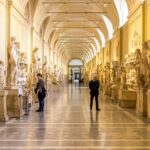
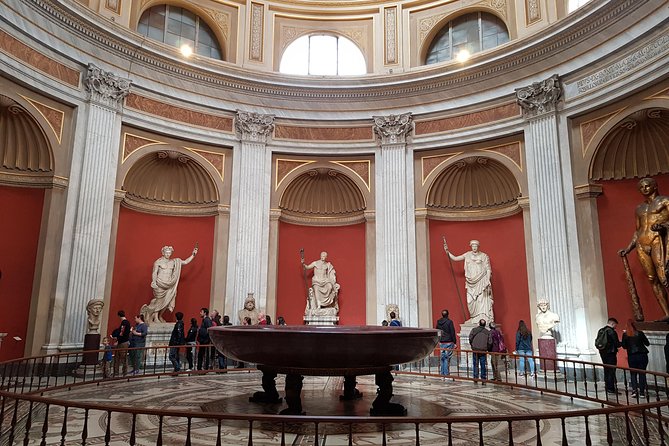
Next comes the Chiaramonti Museum, famous for its large collection—about 1,000 statues and sculptures. You’re walking through an arched gallery filled with cherubs, gods, and emperors, and the tour includes background on the museum’s origins in the early 1800s under Pope Pius VII.
This stop is a smart choice before the Sistine Chapel. Sculpture helps you reset your eyes: faces, poses, and classical styles give your brain a different kind of visual input than paint. By the time you’re ready for frescoes overhead, you’ll appreciate Michelangelo’s scale and ambition more.
And since the guide selects a few specific pieces to emphasize, you’re less likely to feel like you’re “just moving through rooms.”
Stop 4: Sistine Chapel, what your guide will do before you enter
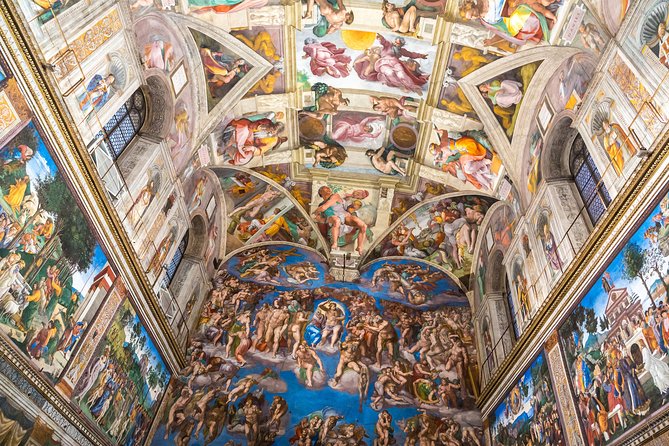
The Sistine Chapel is the finale, and the visit lasts about 30 minutes. This is the moment most people came for—and it still needs context to fully land.
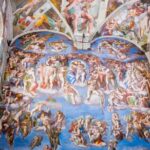
Before entry, your guide gives insights about what you’ll see inside, including Michelangelo’s famous works like The Creation of Adam and The Last Judgement. Once you step inside the chapel, talking isn’t permitted.
Look up. That’s the whole trick. The ceiling is why the Sistine Chapel works even if you’ve seen photos before. In person, the scale changes everything. The guide’s setup helps you know where to look first, so the moment doesn’t become a scramble of camera angles.
Also, the Sistine Chapel is a religious space with cultural weight. It’s still tied to the election of a new pope, even if you’re just visiting as a tourist.
Headsets, Wi-Fi, bathroom access, and the small conveniences that matter
This tour includes headsets, plus free Wi-Fi at the meeting point, bathroom access, and a recharging station for your devices. These details aren’t glamorous, but they’re the kind of help that makes a mobility-focused day easier.
Headsets matter most when crowds get noisy. You’ll also appreciate having a place to recharge—useful if your phone is your navigation lifeline after the tour ends.
One more small but meaningful point: luggage storage is not available. If you’re carrying bags, keep things light. The Vatican security process is already time-consuming.
Dress code and security: the two rules that can make or break your day
Two items can derail a Vatican visit faster than you’d expect.
First: dress code. Knees and shoulders must be covered for men and women. If you’re unsure, bring layers. In Rome in shoulder seasons, it can be fine outside and cold inside—so plan accordingly.
Second: security. Metal detectors require patience. Even with skip-the-line entrance, security still takes time. Aim to arrive ready to move, not still hunting for a missing scarf at the last second.
Accessibility details: disability card requirement and the potential entrance fee
A valid disability identification card must be presented on the day of the tour. If you don’t have walking disabilities, or if your disability level is less than 74%, you’ll be required to pay the Vatican entrance fee in addition to the tour cost—about 23 euros (adult) or 16 euros (child). You pay in cash at the start of the tour.
That’s worth planning for, even if you think you already qualify. Make sure you have the right documentation with you before you leave your hotel.
Who this tour is best for (and who might skip it)
This is a smart fit if you:
- Use a wheelchair or need a step-free route plan
- Want expert commentary without straining to hear through crowds
- Prefer a small group pace (up to 10 travelers)
- Value skip-the-line access at the Vatican Museums and Sistine Chapel
It may be less ideal if you:
- Don’t need wheelchair-focused routing and can handle stairs or long detours
- Want a full Vatican day including St. Peter’s Basilica, because this tour doesn’t include it
- Need luggage storage (not available here)
What the guides are like, based on real experiences
The biggest praise across recent tours is about the people running them. Guides such as Antonio, Monica, Ian, Davide, Sarah, and Linda are repeatedly described as adjusting smoothly for wheelchair users, keeping the pace efficient, and navigating around crowds.
If you’re someone who fears being rushed or feeling left behind, this is reassuring. One guide is described as pushing a wheelchair and making sure everything was seen. Another is described as helping a family move at their pace with no queue and even “against the tide” of visitors.
There’s also a reminder that systems can fail. One low-rating experience mentions a guide didn’t show and a replacement situation took time. You can’t eliminate every risk in a high-demand site like this, so it’s smart to keep your confirmation info handy and arrive early enough that you’re not stuck in limbo.
Should you book this wheelchair Vatican Museums & Sistine Chapel tour?
If you need accessibility support and want the “see the highlights without wrestling the Vatican” approach, I’d lean yes. The combination of step-free routing, skip-the-line entrance, and headsets is exactly what makes a major museum day feel manageable.
The decision comes down to fit and expectations. If your biggest concern is navigating efficiently and hearing good explanations, this tour solves real problems. If you’re flexible, mobile, and traveling on a tight budget, you might find cheaper tours. But if you’re planning a wheelchair day and want fewer unknowns, the added cost is often worth it.
Just go in prepared: bring your disability card if required, follow the dress code, and give yourself a buffer for security. Do those things, and you’ll spend your time where it counts—Pinacoteca, Chiaramonti, and then Michelangelo overhead.
FAQ
How long is the wheelchair accessible Vatican Museums and Sistine Chapel tour?
The tour is about 3 hours total, with approximately 2 hours 30 minutes at the Vatican Museums and about 30 minutes at the Sistine Chapel.
Is this tour private?
Yes. It’s described as a private tour with a maximum group size of 10 travelers.
Is the route fully step-free for wheelchair users?
The tour is designed around an entirely step-free route. The Vatican complex itself can include areas that require elevators or stairs, but this tour is planned to keep you on an accessible path.
Do we get headsets to hear the guide?
Yes. Headsets are included so you can hear the guide’s commentary clearly during the tour.
Are skip-the-line tickets included?
Yes. Skip-the-line entrance tickets are included for the Vatican Museums and the Sistine Chapel.
Is St. Peter’s Basilica included?
No. St. Peter’s Basilica is not included in this tour, but you can visit it independently after the tour ends.
What dress code do I need for the Vatican Museums and Sistine Chapel?
Knees and shoulders must be covered for both men and women. The dress code is strictly enforced and entry may be refused if you don’t meet it.
Do I need to show a disability identification card?
Yes. A valid disability identification card must be presented on the day of your tour.
What if I don’t meet the stated disability level requirement?
If you don’t have walking disabilities, or if your disability level is less than 74%, you will need to pay the Vatican entrance fee (about 23 euros for adults or 16 euros for children) in cash at the beginning of the tour.
How long should I plan for security with metal detectors?
Expect to wait about 20–30 minutes to clear security at the metal detector checkpoint.
Is hotel pickup or drop-off included?
No. Hotel pickup and drop-off are not included.
Is food or drinks included?
No. Food and drinks are not included.

More Tour Reviews in Rome
- Skip-the-Line Group Tour of the Vatican, Sistine Chapel & St. Peter’s Basilica
★ 4.5 · 12,779 reviews