REVIEW · ROME
Rome: Vatican Museums and Sistine Chapel Fast Track Entry
Book on GetYourGuide →Operated by Rome Vatican City · Bookable on GetYourGuide
Skip-the-line changes everything in Vatican City. This fast-track entry is built to get you from the outside chaos to the art inside with express security and quicker access to the Vatican Museums.
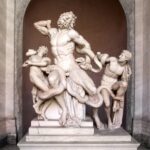
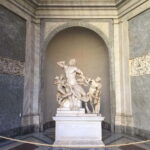
I particularly like the way the ticket gives you the best parts of the museum circuit, including Sistine Chapel time plus major works like the Laocoön and His Sons and the Belvedere Torso. The museum-to-chapel flow also means you’re not forced to guess how to route your visit when lines and crowds are at full volume.
One drawback: this is not a guided tour. You get a host to help you start, then you’re on your own once you’re inside, so it helps to go in with a plan and be comfortable reading the room yourself.
In This Review
- Key things to know before you go
- Fast-track Vatican entry: what it feels like in real life
- Meeting point and the role of the host (it’s shorter than you might expect)
- Express security and museum entry: how to make the first minutes count
- Vatican Museums highlights you’ll want on your priority list
- Laocoön and His Sons, plus classic sculpture hits
- Raphael Rooms: where you should expect your eyes to do the work
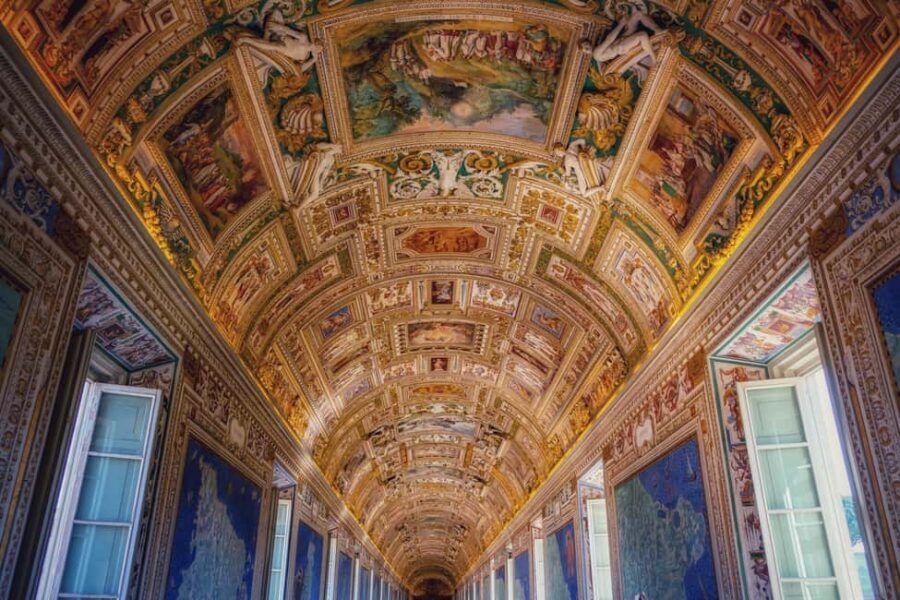
- Gallery of Maps: a surprising room that gives context
- Gallery of Tapestries: Flemish craft up close
- Sistine Chapel planning: time it like a pro
- Raphael Rooms again, and why you should expect overlap
- Time management: how to fit it all into 3 hours
- Price and value: is $67.19 worth it?
- Best fit: who should book this fast-track ticket?
- The closure risk: plan for a Plan B mindset
- Should you book this Rome Vatican City fast-track ticket?
- FAQ
- Is this a guided tour?
- What does skip-the-line entry include?
- How long is the experience?
- Where do I meet the host?
- What language is the host or greeter?
- Do I get help after I arrive at the museum?
- What if the Sistine Chapel or St. Peter’s Basilica closes?
- Is this ticket refundable if I cancel?
Key things to know before you go
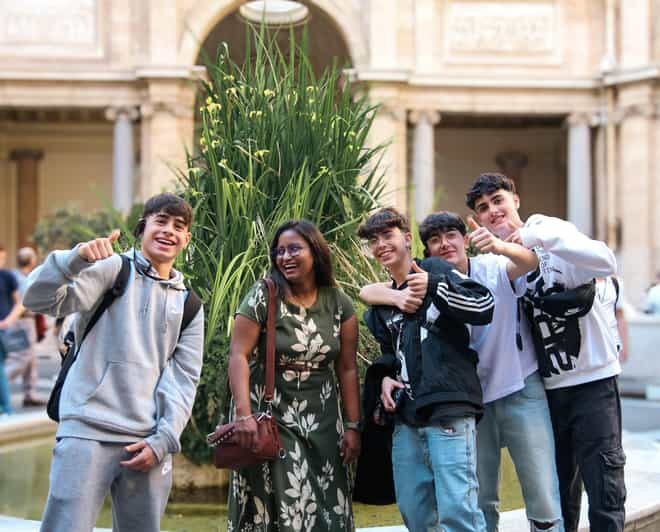
- Skip-the-line entry using express security, so you lose less time waiting.
- A 3-hour window that’s perfect for the museum highlights plus the Sistine Chapel.
- Must-see art stops like Raphael Rooms, the Gallery of Maps, and the Gallery of Tapestries.
- Michelangelo’s ceiling and back wall in the Sistine Chapel are the main event.
- Self-guided exploring after the host gets you inside (no tour guide included).
Fast-track Vatican entry: what it feels like in real life
If you’ve ever tried to visit the Vatican Museums without a timed entry plan, you already know the problem: the lines can eat your entire morning. This ticket is designed for the opposite experience. You’re paying for access that gets you past the worst of the queueing, including an express security check.
That time-saving matters because Vatican visits are not just about art. They’re about flow. When you start late, you miss your preferred viewing moments and you spend more energy pushing through crowds than actually looking. With this setup, you’re more likely to arrive, get inside, and move toward your priorities while your energy is still intact.
And yes, the big names are here: Raphael, Michelangelo, and more. But what really makes the ticket worth considering is that it bundles together the Vatican Museums highlights and the Sistine Chapel within a tight 3-hour visit—so you’re not trapped planning a whole day around the logistics.
Other Sistine Chapel tours we've reviewed in Rome
Meeting point and the role of the host (it’s shorter than you might expect)
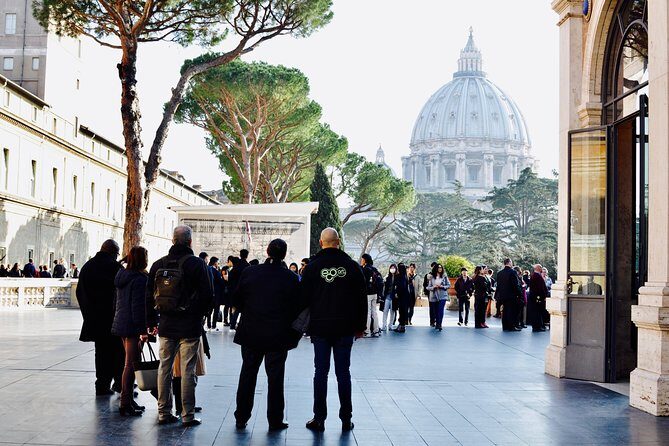
Your day begins with a meet-up close to the Vatican. You’ll meet your host in front of the stairs at the meeting location, holding a placard that says RomeVaticanCity. The host is English-speaking, and the idea is simple: meet, walk to the museums, and get you through the entry process smoothly.
Here’s the key detail: the host helps you get started, but the ticket is not a full guided tour. You’ll be given access and instructions, then your exploration becomes self-guided. That’s great if you want freedom, but it also means you should be ready to navigate on your own once you’re inside.
You can also call an emergency number if needed. One practical takeaway for planning your day: screenshot or save everything you receive ahead of time. If something goes off schedule, you’ll want your ticket details and instructions instantly available.
Express security and museum entry: how to make the first minutes count
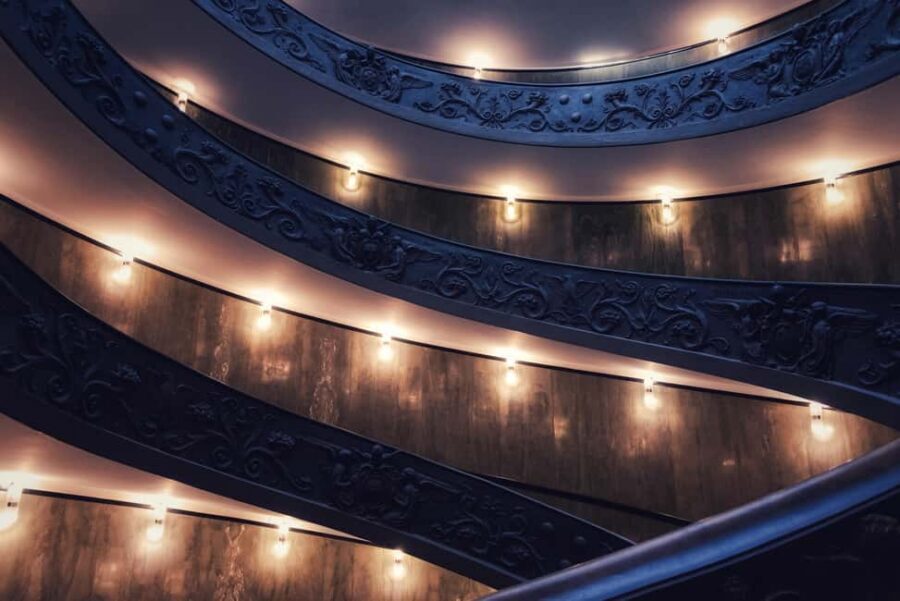
After you meet the host, you walk to the museums and use the skip-the-line entry ticket so you can get into the complex more quickly. The process includes an express security check, which is the usual bottleneck for many visitors.
Once you’re through, you face the classic Vatican challenge: there are too many rooms, and they’re all excellent. Since this experience is self-guided, you’ll get better results by choosing what to see first rather than letting the crowd flow decide for you.
A smart approach for your first stop is to pick one “anchor” set of rooms and one “anchor” artwork. For example:
- Anchor 1: Raphael Rooms
- Anchor 2: a single sculpture moment like the Belvedere Torso
Then you fill in the rest as you move through.
This matters because the 3-hour duration is enough to see the highlights, but it doesn’t give you time for aimless wandering. If you go in expecting to casually drift through everything, you’ll feel rushed. If you go in with priorities, you’ll feel like you’re on top of the visit.
Vatican Museums highlights you’ll want on your priority list
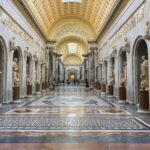
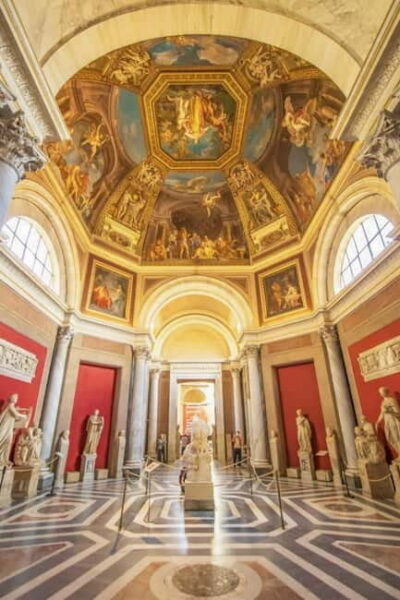
The Vatican Museums cover a wide range of art styles and collections, from sculpture to Renaissance paintings to unique display rooms that don’t feel like the usual museum game. Here are the highlights you can plan to hit during your time inside.
Laocoön and His Sons, plus classic sculpture hits
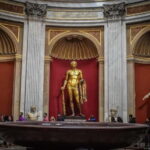
Early on, you can aim for sculpture moments like Laocoön and His Sons and the Belvedere Torso. These aren’t just name-recognition stops. They’re the kind of works that make you slow down because you can see the energy in the forms even before you read any label.
Even if you’re not a serious art history person, you’ll probably notice something: the detail is intense, and the scale is bigger than you expect. In a museum, those two things can be rare. Fast entry helps you reach them before the crush of late arrivals.
Other Vatican Museums tours in Rome

Raphael Rooms: where you should expect your eyes to do the work
Raphael Rooms are a major Renaissance payoff. You’ll see frescoes painted by Raphael and his workshop. The rooms are famous for a reason, but the best part is that they reward attention. When you look closely, you start to understand how the scenes connect and how the composition builds meaning.
Because this is not a guided tour, you won’t get a narration explaining every symbol. Still, you can absolutely enjoy the experience. If you want more meaning, spend a few extra seconds reading the captions for each room and let yourself notice themes like storytelling and how figures are posed.
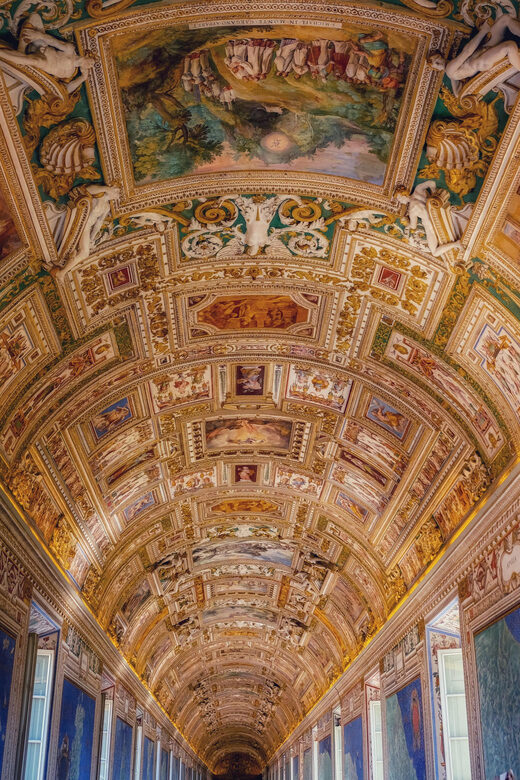
Gallery of Maps: a surprising room that gives context
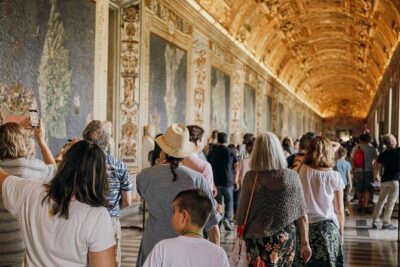
You can also aim for the Gallery of Maps. It’s not what most people expect to be a highlight—until they’re standing there and realizing how much work went into showing geography as art and scholarship.
Even without a guide, you’ll likely appreciate it more if you remember the museum is doing two things at once: showing art and showing how people once understood the world. This is a good place to stop and reset your pace, especially if you feel like the museum has been a sprint.
Gallery of Tapestries: Flemish craft up close
Another standout category is the Gallery of Tapestries, including Flemish tapestries. If you’re used to flat paintings, tapestries can feel different in your body. They’re tactile in spirit. The textures and scale are part of the impact.
This is also a good mid-visit break. After sculpture and frescoes, the tapestries offer a change in visual texture and rhythm. It’s the kind of room that keeps your brain from burning out on only one type of art.
Sistine Chapel planning: time it like a pro
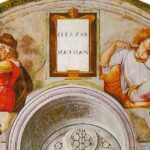
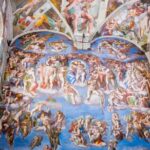
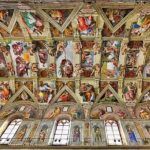
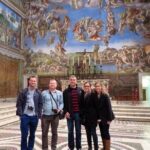
After the museum, you stroll over to the Sistine Chapel and spend time gazing up at Michelangelo’s ceiling painting—one of the most renowned works of the High Renaissance. The ticket experience also points you toward Michelangelo’s masterpieces that cover the ceiling and the back wall of the chapel.
The Sistine Chapel is where the visit stops being “a museum day” and becomes “a once-in-a-lifetime feeling.” Not because it’s magical in a vague way. It’s powerful because you’re seeing a monumental artwork in a room that forces attention upward.
Two practical tips that help you get more out of your viewing time:
- Look up and then scan. Start with the ceiling as a whole, then focus on sections. If you only look at one tiny portion, you’ll miss the way the composition connects.
- Don’t try to read everything. There’s a lot to take in. Captions can’t keep up with the scale of what you’re seeing.
Since there’s no tour guide included, your experience will be shaped by what you personally choose to focus on. That’s not a problem—it’s the point. You get to stand there and decide how to connect the details.
Raphael Rooms again, and why you should expect overlap
You’ll see Raphael Rooms as part of your museum experience, and the description of what you’ll cover includes Raphael Rooms in connection with the overall plan. That means your real “Raphael time” could feel like a sequence rather than a single stop.
If you’re a Raphael fan, it’s excellent because it lets you see his workshop’s work in multiple contexts. If you’re not, it still works because Raphael Rooms are a major way the Vatican Museums communicate Renaissance storytelling through fresco.
Either way, the main point for your planning is this: treat Raphael Rooms like a checkpoint. When you arrive there, slow down enough to actually look, because that’s when the visit starts to feel coherent rather than scattered.
Time management: how to fit it all into 3 hours
A 3-hour visit is a tight schedule by museum standards. But it’s also long enough to do the right things if you move with purpose.
Here’s the reality:
- You’ll spend time moving between sections.
- You’ll spend time in the Sistine Chapel, which is the core payoff.
- You may feel like you’ve seen a lot even if you didn’t cover every corridor.
So don’t aim for everything. Aim for the “main hits,” then let the extra rooms be bonuses when they fit.
A good rhythm is:
1) hit one major sculpture and one major fresco area in the museums
2) add a themed room like Maps or Tapestries
3) save your strongest attention for the Sistine Chapel ceiling
If you do that, you’ll leave thinking you made smart choices rather than just “survived Vatican crowds.”
Price and value: is $67.19 worth it?
At $67.19 per person for about 3 hours, you’re mostly paying for time and friction reduction. The ticket’s core benefit is skip-the-line entry, including express security. If you’ve ever watched people burn an hour just to get through the first checkpoint, you’ll understand why that matters.
This isn’t a full tour, and you’re not buying narration. You are buying access and a smoother start. That can be excellent value if you:
- like walking at your own pace,
- want to prioritize the highlights,
- and don’t need a guide to enjoy the art.
If you want deep explanations and someone to connect everything for you, the price won’t cover that missing piece—because a tour guide is not included. In that case, you’d likely be happier with a guided option instead.
Best fit: who should book this fast-track ticket?
This experience works best if you fall into one of these categories:
- You’re on a tight schedule and want Vatican Museums plus the Sistine Chapel without losing hours to queues.
- You enjoy art but prefer self-paced viewing instead of a scripted route.
- You already know the big names and want to focus on seeing them rather than hearing a long talk.
It may not be the best fit if:
- you strongly need a live guide to explain what you’re seeing,
- you expect a fully guided experience with interpretation at every stop,
- or you dislike the idea that your plans depend on your own navigation once inside.
The closure risk: plan for a Plan B mindset
One important heads-up: due to the passing of Pope Francis, St. Peter’s Basilica and the Sistine Chapel may close without notice. These closures are beyond control, and no refunds will be issued in such cases.
This doesn’t mean you’ll be shut out. It means you should keep some flexibility in your overall Rome plan. If you’re coming for one single chapel moment and nothing else, you’ll feel the stress more than someone who sees this as one of several major Vatican highlights they’ll still try to get to.
Should you book this Rome Vatican City fast-track ticket?
I’d book it if your top priorities are Vatican Museums highlights and the Sistine Chapel, and you want to spend your time looking rather than waiting. The skip-the-line concept is the main value, and the 3-hour duration fits a focused visit.
But if you’re the type who needs a guide to make the art stories click, consider skipping this and choosing a guided option instead. With this ticket, the museum is yours, but interpretation is on you.
If you’re organized—plan what you want to see first, save your ticket info, and use the host start as a springboard—this is a strong way to make the Vatican feel doable.
FAQ
Is this a guided tour?
No. This activity is skip-the-line entry tickets. A tour guide is not included.
What does skip-the-line entry include?
It includes skip-the-line entry via an express security check.
How long is the experience?
It’s listed as 3 hours. Starting times depend on availability.
Where do I meet the host?
Meet in front of the stairs at the meeting point. The host holds a placard that says RomeVaticanCity.
What language is the host or greeter?
The host or greeter is in English.
Do I get help after I arrive at the museum?
You’ll meet your host, walk together to the museums, and enter with the ticket. After entry, the experience is not described as a guided tour.
What if the Sistine Chapel or St. Peter’s Basilica closes?
They may close without notice due to circumstances beyond control, and no refunds will be issued in those cases.
Is this ticket refundable if I cancel?
No. The activity is listed as non-refundable.
More Skip-the-Line Tours at the Sistine Chapel & Vatican
- Skip-the-Line Group Tour of the Vatican, Sistine Chapel & St. Peter’s Basilica
★ 4.5 · 12,779 reviews
More Vatican Museums Tours at the Sistine Chapel & Vatican
More Sistine Chapel Tours at the Sistine Chapel & Vatican
- Skip-the-Line Group Tour of the Vatican, Sistine Chapel & St. Peter’s Basilica
★ 4.5 · 12,779 reviews